Bachelor program in Japanese Studies
Bachelor program in Japanese Studies
1. Introduction
Name of training program:
- Vietnamese: Nhật Bản học
- English: Japanese Studies
Code of training program: 7310613
Degree: Bachelor
Academic degree:
- Vietnamese: Cử nhân Nhật Bản học (chương trình chất lượng cao)
- English: Bachelor in Japanese Studies (High-quality Trainning Program)
Language of instruction: Vietnamese, English, Japanese
Period of study: 4 years
Location: My Dinh and Hoa Lac campuses
2. SIGNIFICATION AND OBJECTIVES OF ESTABLISHING JAPANESE PROGRAM
Vietnam Japan University (VJU) was established on July 21, 2014 and is the 7th member of Vietnam National University, Hanoi. The birth of VJU was not only the result of the cooperative relationship as an extensive strategic partnership between the governments of Vietnam and Japan, but also the crystallization of the ideas, ambitions and dedication made by scientists, agencies, organizations and businesses of the two countries.
Japanese Studies is the first training area selected by VJU to open a bachelor’s program after considering ways to promote the strength of the university and to express its dedication to the field of higher education in Vietnam that can contribute to the development of cooperative relations in many aspects of the two countries of Vietnam and Japan in the new era.
Therefore, unlike other traditional programs of Japanese studies, VJU’s Japanese studies program has been built on an interdisciplinary basis between social sciences and humanities, natural sciences and technologies with the aim of training experts of Japanese studies who have comprehensive understanding of Japan and mastery of in-depth knowledge in one of the three fields (concentrations): Japanese Legal system, Japanese Economics – Management and Japanese Language Education.
These Vietnamese bachelors with deep comprehensive understanding of Japan are expected to be experts, managers, and leaders who can contribute to promoting the comprehensive cooperative relationship between Vietnam and Japan in the near future. On the contrary, the extensive strategic partnership for peace and prosperity in Asia that the two countries are building together is a sustainable basis for the development of the program.
3. CAREER OPPORTUNITIES
Upon completing the Bachelor’s program in Japanese Studies, graduates may hold the following positions:
- Conducting research at agencies related to Japan; teaching Japanese Studies and the Japanese language within the system of universities, colleges, vocational secondary schools, and vocational training institutions;
- Working in diplomacy at the Ministry of Foreign Affairs, the Embassy of Japan in Vietnam, the Embassy of Vietnam in Japan, and international organizations in Vietnam such as the Japan Foundation, JASSO, etc.; providing consultancy and advisory services related to Japan within agencies that formulate the guidelines and policies of the Party and State, such as ministries, departments, sectors, government or National Assembly offices, or agencies and organizations within the political system and socio-economic organizations;
- Working in foreign enterprises and companies—particularly Japanese enterprises and companies in Vietnam and in Japan—or in domestic enterprises and companies, particularly Vietnamese enterprises and companies operating in Japan or maintaining partnerships with Japanese organizations and enterprises.
Capacity for Further Study and Advancement After Graduation
Graduates of the Bachelor’s program in Japanese Studies are able to:
- Independently explore and resolve issues arising during practical work at agencies, organizations, and enterprises;
- Engage in self-study and self-directed research on theoretical and practical issues related to Japan;
- Continue to postgraduate study (Master’s, Doctoral) in specializations related to Japanese Studies at universities in Vietnam, in Japan, and across the region and the world.
4. Superiority of the program
4.1 Liberal Arts education
- Provides a broad but integrated base of knowledge, including social sciences and natural sciences and technology.
- Provides in-depth and comprehensive knowledge of Japan.
- Encourage students toward self-study to develop themselves so that they can adapt to the changes of society in the era of Industry 4.0.
4.2 Appreciate the cultural identity of learners
Learners can approach Japan not in a one-way approach but on the basis of comparison with Vietnam in the global context, from the perspective of Vietnamese people. On that basis, learners can actively choose the knowledge and experience of Japan that might be suitable for Vietnam by the Japanese to contribute to the development of Vietnam in the future. The goal of the program is to train experts who are knowledgeable about Japan on the basis of Vietnamese culture and feelings.
4.3 Contemporary and global environment
- Provides comprehensive knowledge about contemporary Japan as well as current global issues of concern, especially those related to the sustainable development of humankind.
4.4 Opportunity to study on Japan right in Vietnam
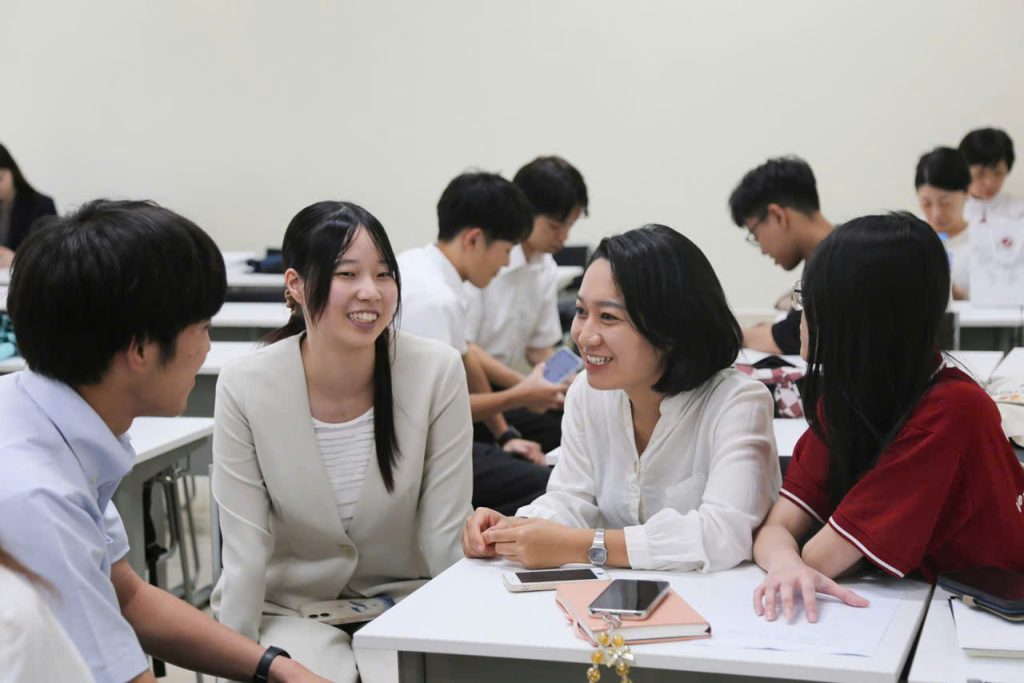
- In addition to the Vietnamese lecturers, the Program has the cooperation of 35 lecturers from 13 major Japanese universities.
- Students will be able to participate in many exchange activities with Japanese students.
4.5 Focus on fostering foreign language proficiency
- The training program is designed with many Japanese language courses and many other courses taught in Japanese, so graduates will have a high-level skill of Japanese.
- International academic environment with the participation of many international lecturers and students (both Undergraduate and Graduate).
4.6 Modern learning methods
- Many modules in the training program use active learning methods.
- Based on the experience of Japanese universities, the program will introduce the system of Japanese style seminar into some modules to develop communication, discussion, teamwork skills and enhance interaction between lecturers and students. and among students.
4.7 Highly practical nature
- The content of the modules is highly practical, with the participation of many experienced experts from Japanese and Vietnamese organizations and businesses.
- Students will have the opportunity to interact with organizations and businesses through Internship programs.
4.8 Opportunity to study in Japan
- Students can have the opportunity to study at prestigious Japanese universities such as Waseda University, Hosei University, Obirin University…
5. MESSAGES FROM PROGRAM

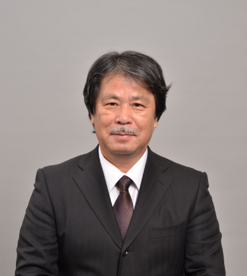
Prof. Dr. Motoo Furuta
Former Rector
“Like Vietnam, today Japan is changing drastically. In order to have a comprehensive and profound understanding of such a transforming Japan, we need to compare it with Vietnam and other countries in the world. I firmly believe that the knowledge and vision that students have after graduating from the Japanese Studies Program of Vietnam Japan University will be a compass to guide their lives and careers in the future, this twenty-first century.”.
Prof. Dr. Yamada Mitsuru
Faculty of Social Sciences
Waseda University – Program Co-Director in Japanese Studies
“One of the features of the Japanese Studies Program of Vietnam Japan University is that there are many modules that are jointly managed by both Japanese and Vietnamese lecturers and scholars. This is a great academic environment, where students can both build a broad knowledge base, in-depth expertise, and improve their ability to use foreign languages. I hope they will seize that opportunity to realize their dreams and ambitions in the future.“
6. Program and Learning pathway
6.1 Training Program
The training program consists of 136 credits, which include the following knowledge blocks:
* General knowledge : 31 credits
* Knowledge of various disciplines: 28 credits
* Knowledge of training area: 48 credits
* Knowledge of three concentrations: 10 credits
* Knowledge of specialty and graduation: 19 credits
Specific training program: Click Here
- Japanese Studies Honors Undergraduate Curriculum (VJU2020 & VJU2021): Click Here
- Japanese Studies Honors Undergraduate Curriculum (VJU2022–VJU2024): Click Here
- Japanese Studies Honors Undergraduate Curriculum (VJU2025 Onwards): Click Here
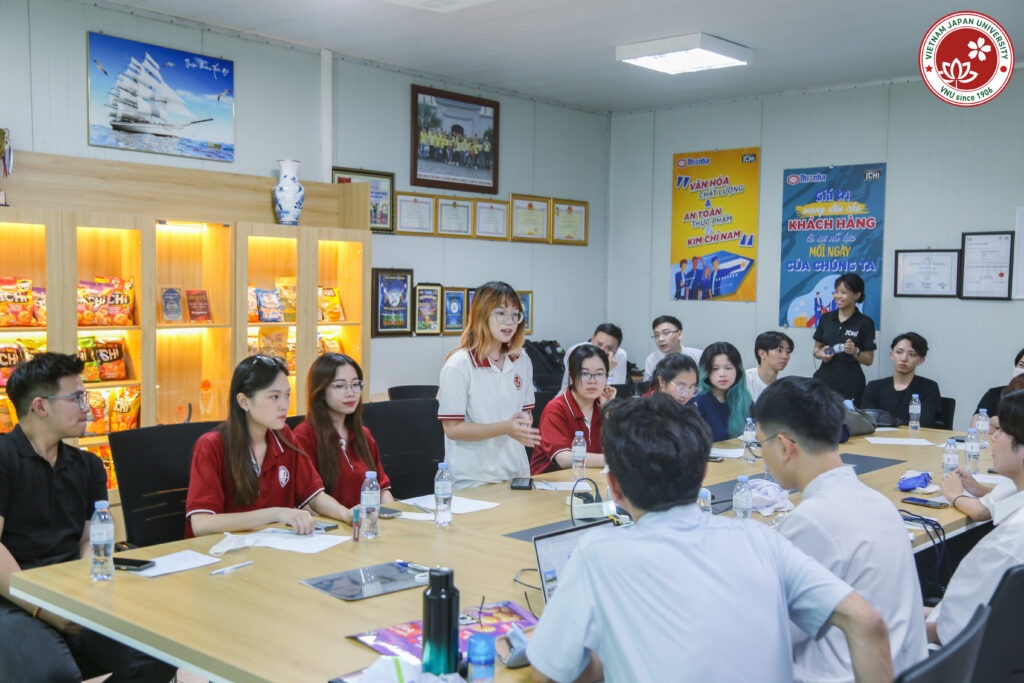
Japanese Studies Program Curriculum Framework (VJU2025 Onwards)
Japanese Studies Program Curriculum Framework (VJU2022 Onwards)
Japanese Studies Curriculum Framework (VJU2020 & VJU2021)
6.2 Learning Path
The learning path is divided into two main phases:
- In the first 2 years, students acquire general knowledge about humanities, social sciences, natural sciences, basic technology and knowledge about global issues of concern today. This will function as indispensable foundation when students wish to learn about contemporary Japan in comprehensive ways in the following 2 years of study.
- In the latter two years, students are required to to choose one of three concentrations: Japanese legal system, Japanese Economy and Management, and Japanese Language Education. These are the three concentrations selected on the basis of the current needs survey in Vietnam and also the orientations that can promote the strength of Vietnam Japan University.
- In parallel with the acquisition of general and specialized knowledge mentioned above, students will study Japanese for 4 years. In addition, students can improve their Japanese language proficiency through a number of specialized courses taught in Japanese, especially those on Japanese Studies or Japanese Language Education.
7. LECTURER

Prof.Dr. Motoo Furuta

Professor, Academician Dr. Vu Minh Giang
Professor, Dr. Yamada Mitsuru

Assoc. Prof. Dr. Pham Thi Thu Giang
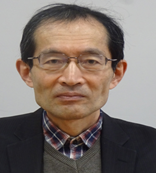
Professor, Dr. Momoki Shiro
Vietnamese History, Area Studies

Professor, Dr. Hori Yoshie
Southeast Asian Studies, Japan-Southeast Asia Relations
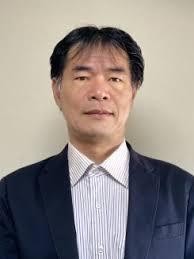
Professor, Dr. Đo Manh Hong
Business Administration

Professor, Dr. Miyazaki Satoshi
Japanese Language Education

Professor, Dr. Habu Eri
Economic Law

Professor, Dr. Sato Yasunobu
Law and Social Issues

Professor, Dr. Kurihara Hirohide
History, International Relations

Associate Professor, Dr. Pham Quy Long
Business Administration
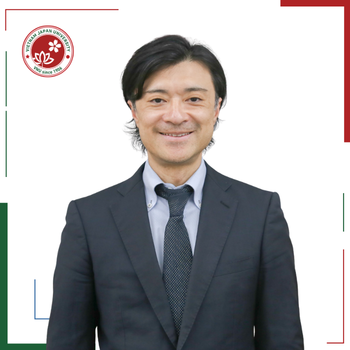
Associate Professor, Dr. Fujino Shinya
Business Administration
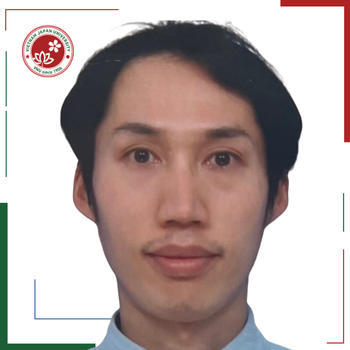
Dr. Fujimoto Norimasa
Religious Studies, Religious Philosophy
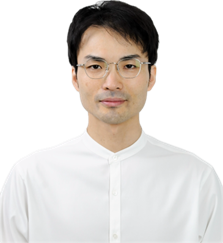
Master, Yoshida Hiroyoshi
Japanese Language Education
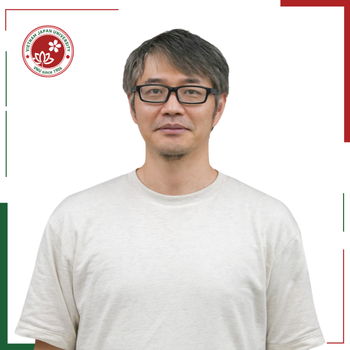
M.A Negishi Masami
Business Administration

M.A Le Bao Viet

Dr. Le Nu Trang Nhung

M.A Vu Thanh Thuy
Economic Law

M.A Ngo Minh Thao
Program Assistant
8. ADMISSIONS
For detailed admission information, click here
Admission Quota for 2026: 120 students
Admission Methods:
- Admission based on application dossier and interview
- Admission based on the 2026 National High School Graduation Examination results
- Admission based on the 2026 Vietnam National University, Hanoi High School Competency Assessment (HSA) results
- Other admission methods:
- Admission based on international English or Japanese language certificates in combination with the 2026 National High School Graduation Examination results
- Admission based on standardized test results, including SAT, ACT, or GCE A-Level qualifications
- Direct admission and priority admission in accordance with the University’s admission regulations
9. Learning outcome
Learning Outcomes for Knowledge, Skills, Degree of Autonomy & Responsibility, and Ethical Qualities
PLO 1: Apply foundational knowledge of social sciences and humanities, natural sciences, and technology to analyze a specific situation in the social, economic, political, legal, or cultural domain.
PLO 2: Apply specialized knowledge of Japanese Studies to solve a practical problem related to Japan.
PLO 3: Use office software to draft and process at least three types of academic or administrative documents (research reports, data tables, presentations).
PLO 4: Collect, synthesize, and analyze information from a variety of sources to identify problems requiring resolution and to propose solutions to a specific problem.
PLO 5: Attain English proficiency at Level 3/6 and Japanese proficiency at Level 4/6 according to the Vietnamese Foreign Language Proficiency Framework, demonstrating the ability to communicate and use foreign languages in academic and professional contexts, thereby promoting cooperation opportunities between Vietnam and Japan.
PLO 6: Plan, manage time, and coordinate resources effectively to complete a study project or group task on schedule.
PLO 7: Communicate effectively—particularly in intercultural contexts—and collaborate to complete a group task or project.
PLO 8: Identify problems, conduct independent research, and propose at least one feasible solution, as demonstrated in a final capstone learning product, thereby strengthening future entrepreneurial capacity.
PLO 9: Demonstrate the ability to work independently, a sense of responsibility, a progressive attitude, adaptability, and a positive response when participating in learning activities, group activities, or practical tasks under pressure.
PLO 10: Comply with regulations and fully carry out academic responsibilities.
PLO 11: Demonstrate critical thinking and logical reasoning, with the capacity for self-directed learning, self-improvement, and lifelong learning.
PLO 12: Demonstrate a spirit of cooperation and solidarity within a team; guide, supervise, and evaluate the quality of work; respect differences; and support and be willing to help others.
Foreign Language Graduation Requirements
- English: Students are required to achieve English language proficiency equivalent to Level 3 of the Vietnamese Six-Level Foreign Language Proficiency Framework (VSTEP), in accordance with the regulations of the Ministry of Education and Training and the Vietnam National University, Hanoi.
- Japanese: As this is a high-quality undergraduate program, students are required to achieve Japanese language proficiency equivalent to Level 4 of the Vietnamese Six-Level Foreign Language Proficiency Framework (VSTEP), in accordance with the regulations of the Ministry of Education and Training and the Vietnam National University, Hanoi.